Reliable, quality diesel engines

SDEC Diesel Engines: Official Agents

We are the sole authorised distributor for SDEC diesel engines in Sub-Saharan Africa. 

The Generator King is a leading distributor of diesel engines, diesel generators, components, and parts. We offer a complete range of single phase and three phase diesel engines for sale from 12kVA - 1100kVA.

SDEC was founded in 1947. They supply diesel engines to customers around the world. They are ISO9001, QS9000 and TS16949 certified, which is testament to their quality and reliable performance.

Official SDEC Agents

Unauthorised "grey" parallel imports put your diesel engine at risk. The Generator King is the region's sole authorised SDEC distributor.

Get in touch with one of our sales consultants today to get your obligation free quote and peace of mind.

GET SDEC DIESEL ENGINES ON WHATSAPP

Need a quote for a diesel engine or OEM parts?

Simply send us a message on WhatsApp with pictures or information about the specific engine you need and our team will promptly provide you with a competitive quote.

Whether it is filters, fuel pumps, injectors, or a complete diesel engine block, we are here to help keep your generator running smoothly. Click the link to start chatting directly with our parts sales team.

Engineering & Quality Standards

SDEC diesel engines are built using world-class German automotive production standards and strict international manufacturing quality control.

Whether you need a diesel engine for a generator build, a pump room or for agricultural applications, these engines are the perfect fit for anyone looking for excellent performance and reliability.

Why SDEC Power?

  • Best Value for Money
  • Largest Local Stock Holding
  • Expert Technical Support
  • Sub-Saharan Logistics
  • 70+ Years Experience
Our Delivery Channels

Sub-Saharan Logistics

We ship SDEC engines, diesel generators, alternators and parts throughout South Africa and across the continent, including Namibia, Botswana, Malawi, Mozambique, Zambia, Zimbabwe, Swaziland, and Lesotho.

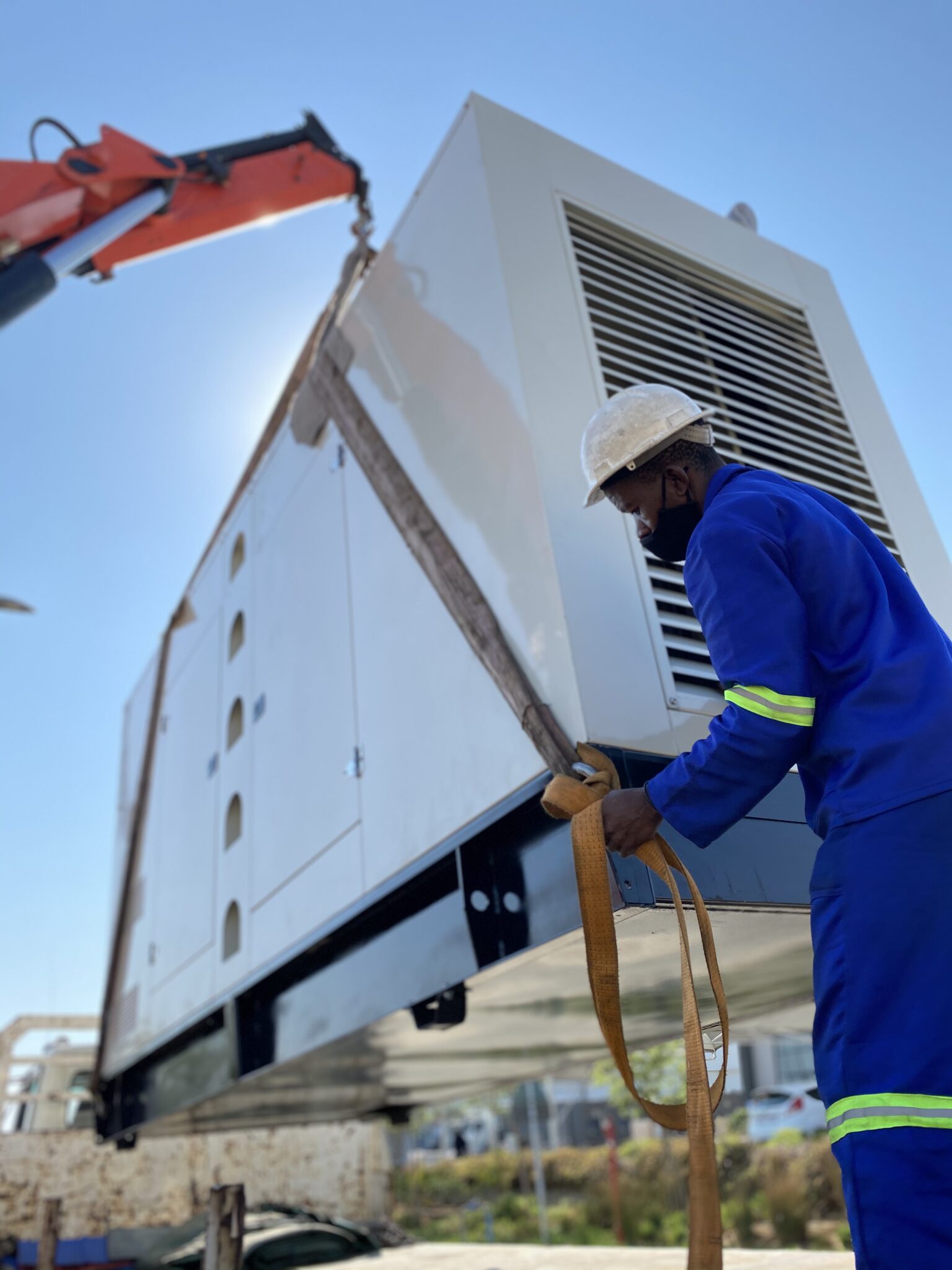
Our team handles the entire logistics process, from factory  loading to cross border transport, ensuring your equipment arrives safely and on time.

We hold a large volume of stock and genuine replacement parts at our warehouses so we can supply clients across Africa quickly and efficiently.

FREQUENTLY ASKED QUESTIONS

What primary factors should dictate my choice between a single-phase or a three-phase generator system?

The decision depends entirely on your facility's pre-existing electrical infrastructure and active machinery demands. Single-phase systems (230V) are standard for domestic environments, simple commercial lighting arrays, and basic security frameworks. Three-phase setups (400V) are mandatory for industrial operations, manufacturing facilities, data server centers, and any site running heavy inductive loads like ducted air-conditioning chillers, elevators, or large electric motors. Running a heavy three-phase motor on a single-phase supply is technically impossible without specialised phase-conversion hardware.

What is the standard warranty on SDEC engines purchased?

Every SDEC engine supplied by SDEC features a 24-Month or 1000-Hour limited warranty (whichever occurs first) as standard. This warranty covers the direct replacement of any manufacturing or material component defects to protect your primary power infrastructure investment. Genuine original factory maintenance components, mechanical replacement spares, and technical engineering advice are actively managed out of our regional distribution hubs to guarantee maximum field uptime.

What is the operational difference between "Prime Power" and "Standby Power" ratings?

The rating definitions map directly to how your generation framework intends to deploy the engine:

  • Prime Power: Calibrated for an unlimited number of operational hours per year under variable load profiles (such as off-grid agricultural pumping or remote mining). You are permitted a temporary 10% overload for up to 1 hour in every 12-hour operational cycle.

  • Standby Power: Represents the absolute maximum output available during emergency utility outages or grid failures. Overload running is strictly prohibited under standby guidelines, and the engine is rated for up to 200 hours of emergency runtime per year. For both configurations, the average 24-hour load factor must not exceed 80%.

Are SDEC engines manufactured to international automotive standards?

Yes. SDEC (Shanghai Diesel Engine Co.) operates within the strict manufacturing quality matrices of SAIC Motor (one of the world's largest automotive groups). SDEC powertrains are engineered using world-class German automotive production control methodologies and hold ISO9001, QS9000, and TS16949 certifications. This automotive-grade framework secures unparalleled product consistency, strict material tolerances, and balanced internal vibration damping compared to standard industrial blocks.

What specific global partnerships back SDEC's modern engine designs?

SDEC’s high-yield engine platforms are developed through world-renowned international joint ventures and technical collaborations. The E Series and G Series blocks are designed in partnership with Austria’s AVL, maximising thermal efficiency and overall lifespan. The H Series utilises premium combustion engineering, while the heavy-duty D Series implements performance architecture from SwRI (Southwest Research Institute, USA). These global partnerships ensure a design lifespan exceeding 30,000 hours before a major overhaul is required.

How well do SDEC engines handle extreme cold-starts and harsh environments?

SDEC engines feature exceptional environmental resilience tailored to harsh, remote sub-Saharan applications. Thanks to their optimised compression ratios and high-pressure fuel setups, these engines achieve instantaneous emergency cold-starts down to minus 10°C without an intake pre-heater. When retrofitted with an auxiliary block heating system, they maintain seamless start-up capabilities down to minus 32°C. The integrated component layout also features 20% fewer basic engine parts than conventional diesel powertrains, drastically reducing the structural points susceptible to high-dust or high-ambient field wear.

What does the typical standby generator startup loop entail when a utility blackout hits?

The moment municipal grid voltage fluctuates or drops past safe thresholds, your automated transfer switchboard (ATS) isolates the main line to prevent dangerous back-feeding. The generator's digital controller executes a multi-pulse starting crank, registers stable engine oil pressure and coolant metrics, and spins the heavy industrial engine block up to its native operating velocity (typically 1500 rpm). Once the Automatic Voltage Regulator (AVR) confirms clean electrical output, the ATS closes the generator contacts, restoring full power to your facility within 8 to 15 seconds.

Start typing to see products you are looking for.